Crossword Puzzle Sizes Explained: Mini vs Standard vs Large
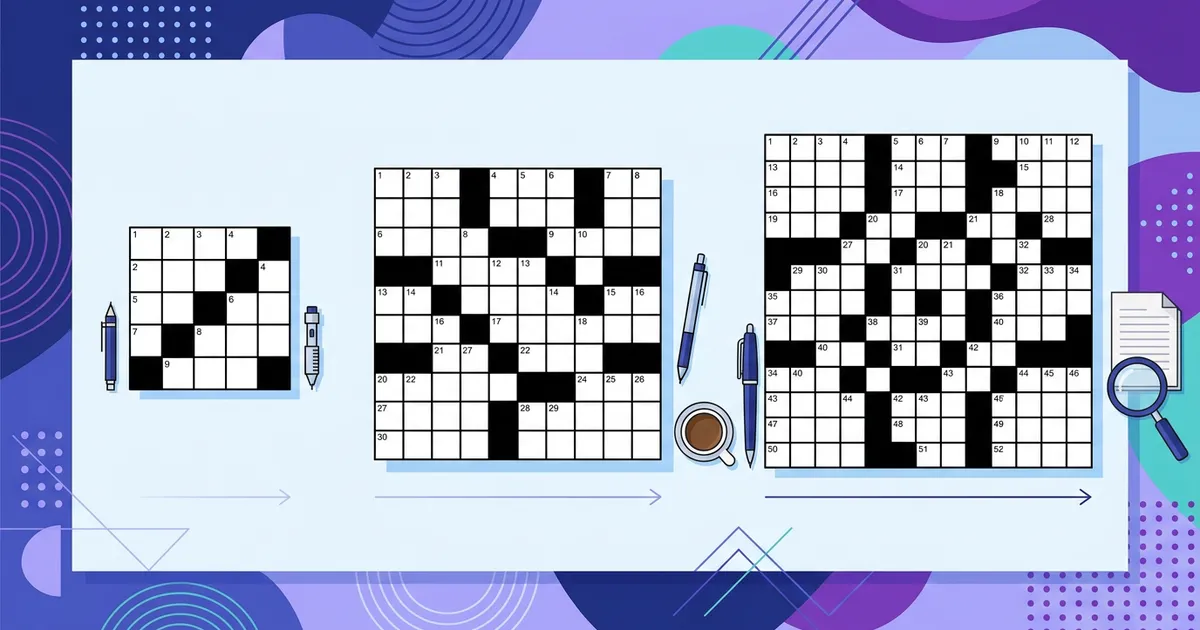
Not all crossword puzzles are the same size. The grid dimensions determine how many words you solve, how long it takes, and how challenging the experience is. Whether you want a 5-minute coffee break puzzle or a 45-minute deep dive, choosing the right size makes a big difference.
Here's everything you need to know about crossword puzzle sizes.
The Three Grid Sizes
Mini (7×7)
The quick puzzle. A 7×7 grid has 49 squares, typically containing 8-12 words. Most solvers complete a Mini in 3-10 minutes.
Best for:
- Morning coffee warm-up
- Meeting icebreakers
- Kids and beginners
- Commute-friendly solving
- Building a daily habit without a big time commitment
What to expect: Shorter words (3-6 letters mostly), fewer crossing opportunities, and clues that tend to be more straightforward. The small grid means every word matters — there's no room for filler.
Try a Mini PuzzleStandard (11×11)
The sweet spot. An 11×11 grid has 121 squares, typically containing 20-30 words. Most solvers complete a Standard puzzle in 10-25 minutes.
Best for:
- Daily solving (the Grid Genius daily challenge uses this range)
- Balanced challenge and time commitment
- Most adults and experienced teen solvers
- Classroom activities and team building
- The "just right" Goldilocks size
What to expect: A mix of short and medium-length words (3-11 letters), multiple crossing points per word, and room for themed vocabulary. Standard puzzles balance accessibility with depth.
Large (15×15)
The full experience. A 15×15 grid has 225 squares, typically containing 35-50 words. Solving takes 25-60+ minutes depending on difficulty.
Best for:
- Dedicated crossword sessions
- Experienced solvers who want depth
- Weekend relaxation (the traditional Sunday crossword feeling)
- Comprehensive topic exploration
- Serious brain exercise
What to expect: Long entries (8-15 letters), dense interlocking, more obscure vocabulary at harder difficulties, and the full newspaper crossword experience. Large puzzles reward patience and broad knowledge.
Size Comparison Table
| Feature | Mini (7×7) | Standard (11×11) | Large (15×15) |
|---|---|---|---|
| Squares | 49 | 121 | 225 |
| Words | 8-12 | 20-30 | 35-50 |
| Solve time | 3-10 min | 10-25 min | 25-60+ min |
| Longest word | ~7 letters | ~11 letters | ~15 letters |
| Best for | Quick breaks, beginners | Daily solving, most people | Deep sessions, enthusiasts |
| Difficulty range | Easy feels very easy | All difficulties work well | Hard is genuinely hard |
| Print size | Fits on half a page | Full page | Full page (larger cells) |
How Grid Genius Sizes Compare to Other Crosswords
| Crossword | Grid Size | Words | Solve Time |
|---|---|---|---|
| NYT Mini | 5×5 | 10-12 | 1-3 min |
| Grid Genius Mini | 7×7 | 8-12 | 3-10 min |
| Grid Genius Standard | 11×11 | 20-30 | 10-25 min |
| NYT Daily (Mon-Sat) | 15×15 | 72-78 | 10-60 min |
| Grid Genius Large | 15×15 | 35-50 | 25-60 min |
| NYT Sunday | 21×21 | 130-140 | 30-90 min |
Why does the NYT 15×15 have more words than Grid Genius 15×15? The NYT uses denser grid construction — fewer black squares, more words, shorter average word length. Grid Genius 15×15 grids have more black squares and longer average word lengths, creating a different solving experience: fewer but more substantial entries.
Which Size Should You Choose?
Based on time available
- Under 5 minutes → Mini (7×7)
- 5-15 minutes → Mini (Medium/Hard) or Standard (Easy)
- 15-30 minutes → Standard (Medium/Hard)
- 30+ minutes → Large (any difficulty)
Based on experience level
- First crossword ever → Mini (7×7) + Easy difficulty
- Casual solver → Mini or Standard + Easy/Medium
- Regular solver → Standard + Medium/Hard
- Experienced enthusiast → Large + Hard
Based on use case
- Teachers → Mini for warm-ups, Standard for activities
- Team building → Mini for icebreakers, Standard for events
- Kids → Mini for ages 6-8, Standard for ages 9+
- Seniors → Mini to start, Standard as confidence grows
- Printing → Any size prints well on standard paper
Size × Difficulty: 9 Combinations
Grid Genius uniquely offers size and difficulty as independent settings. This creates 9 distinct experiences:
| Easy | Medium | Hard | |
|---|---|---|---|
| Mini | Very quick, very accessible. Great for kids and absolute beginners. | Quick but requires thought. Good daily warm-up. | Short but tricky. Tests vocabulary in a compact format. |
| Standard | Relaxed, enjoyable solve. The most popular combination. | The balanced challenge. What most daily puzzles aim for. | Genuinely challenging. Requires broad knowledge. |
| Large | Long but relaxed. Good for unwinding. | Substantial and rewarding. A proper crossword session. | Expert territory. Specialized vocabulary, complex clues. |
The beauty of independent size and difficulty is that you can scale one without the other. Want a quick challenge? Mini + Hard. Want a long relaxing session? Large + Easy. Most other crossword apps tie size to difficulty — Grid Genius doesn't.
Tips for Each Size
Mini tips
- Don't overthink — with only 8-12 words, there aren't many possibilities
- One solved word often unlocks 2-3 others through crossings
- If you finish too fast, try the same topic on Medium or Hard
Standard tips
- Start at the edges and work inward — corner words have fewer crossings
- Look for the longest words first — they're often the most distinctive
- Use AI Hints when stuck on a single crossing that blocks multiple words
Large tips
- Don't try to solve linearly (1-Across, 2-Down, etc.) — jump around
- Fill in easy clues across the whole grid first for maximum crossing letters
- Take breaks — a Large Hard puzzle is a marathon, not a sprint
Find your perfect puzzle size
Mini for quick breaks, Standard for daily solving, Large for deep sessions.
Start PlayingReady to play?
AI-generated crossword puzzles on any topic — with smart AI hints that help you think, not just give away answers. Free to play, no sign-up required.
Start Playing Free